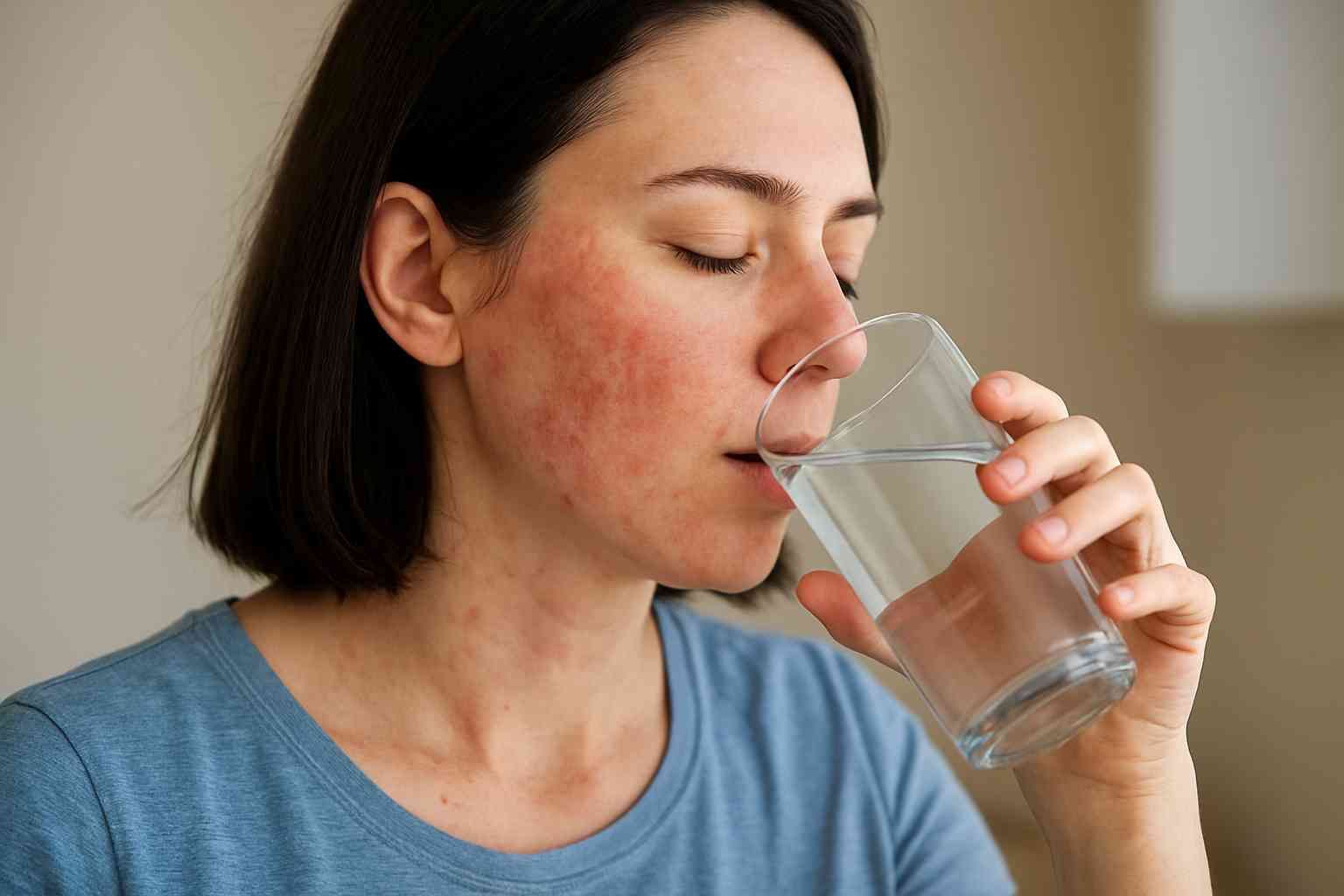
Yes, staying consistently hydrated supports the skin barrier, reduces dryness, and makes topical treatments more effective.
Daily water intake alone won’t cure atopic dermatitis, but when paired with moisturizers, gentle cleansing, and trigger management, it helps reduce transepidermal water loss and soothes flare-ups.
Introduction: Can Drinking Water Help Eczema?
If you live with eczema, you know how frustrating dry, itchy skin can be. Naturally, you might wonder — can drinking water help eczema? The short answer is yes, staying hydrated can make a difference, though it’s not a cure. Eczema, or atopic dermatitis, weakens the skin barrier, making it harder for the skin to retain moisture. When your body lacks hydration, that barrier becomes even more fragile, leading to dryness, irritation, and flare-ups.
Drinking enough water helps restore your body’s internal hydration and supports healthy skin barrier function. It also reduces transepidermal water loss (TEWL) — the process where moisture escapes from the skin’s surface. While moisturizers and emollients treat dryness externally, your daily water intake nourishes your skin from within. Understanding how hydration and eczema are connected is the first step toward healthier, calmer skin.
The Science Behind Hydration and Eczema
Water plays a vital role in how your skin looks and feels — especially when you’re managing eczema. Research shows that people with atopic dermatitis often have a weaker skin barrier, which allows more moisture to escape. When you stay hydrated, your body can maintain better moisture balance and reduce transepidermal water loss (TEWL).
Studies suggest that increasing daily water intake may improve overall skin hydration and elasticity, especially for those who don’t drink enough fluids. Although drinking water won’t instantly clear eczema, it helps reduce dryness, supports barrier repair, and can make moisturizers more effective. Simply put, hydration for eczema works best as part of a complete skincare routine — inside and out.
What Research Says: Does Drinking Water Reduce Eczema Symptoms?
When it comes to the question can drinking water help eczema, research offers encouraging but mixed results. Some clinical studies show that proper hydration can increase skin moisture and reduce itchiness, especially in people who typically drink less water. A 2022 review found that adding about two liters of water per day improved skin hydration in low-intake groups. However, experts from the National Eczema Association note there’s no strong evidence that drinking more water directly clears eczema flare-ups.
The takeaway? Staying well-hydrated helps your skin perform at its best, but it works alongside — not instead of — moisturizers, barrier repair creams, and lifestyle care. Hydration supports your skin’s foundation, making other eczema treatments more effective.

How Water Intake Supports the Skin Barrier
Your skin barrier acts like a shield — it locks in moisture and keeps irritants out. When you have eczema, this barrier becomes weakened, leading to dryness and inflammation. Drinking enough water strengthens your skin from within by supporting its natural moisture balance and reducing transepidermal water loss (TEWL).
Hydrated skin cells are more flexible and better able to repair tiny cracks that often trigger itching and redness. Proper internal hydration also helps maintain ceramides and lipids, which are essential for a healthy barrier. While moisturizers work on the outside, drinking water keeps your skin hydrated on a cellular level — a simple yet powerful step in eczema management.
Factors That Influence the Effect of Water on Eczema
Not everyone experiences the same results from drinking more water, because several factors affect how hydration impacts eczema symptoms. Environmental conditions like humidity, temperature, and hard water exposure can change how your skin retains moisture. People living in dry or air-conditioned environments often lose hydration faster through the skin.
Your diet, stress levels, and skincare routine also play a big role. Using harsh soaps or skipping moisturizers can undo the benefits of good water intake. Even the mineral content and chlorine in tap water can irritate sensitive skin. To get the best results, combine proper hydration with gentle cleansers, barrier-repair creams, and a consistent skincare routine that supports moisture balance.

Practical Tips: How Much Water Should You Drink for Eczema?
| Topic | Details |
|---|---|
| Recommended Water Intake | Most experts suggest drinking 6–8 glasses of water daily to support healthy skin and hydration. |
| Adjustments | Increase intake if you live in a hot climate, exercise regularly, or have dry indoor air. |
| Hydration Goal | Aim to maintain steady internal hydration — avoid excessive water consumption. |
| Water-Rich Foods | Add foods like cucumbers, oranges, and melons to boost hydration naturally. |
| Hydration Indicator | Check urine color — pale yellow indicates you’re well-hydrated. |
| External Hydration Support | Combine water intake with moisturizers, ceramide creams, or humectants to lock in moisture. |
| Key Takeaway | Drinking water helps eczema when paired with a complete skincare routine, not as a standalone fix. |
Other Skincare Habits to Support Hydration
Staying hydrated from the inside is important, but your skincare routine completes the process. Always apply a fragrance-free moisturizer right after bathing to seal in water and repair the skin barrier. Choose products rich in ceramides, lipids, or hyaluronic acid for lasting hydration. Use gentle cleansers instead of harsh soaps to avoid stripping natural oils.
Adding a humidifier to your home can also help maintain moisture in the air, reducing skin dryness. Limit hot showers, and opt for lukewarm water to prevent irritation. Combined with regular water intake, these small changes can significantly improve skin hydration and ease eczema flare-ups naturally.
FAQs: Can Drinking Water Help Eczema?
Q1. Will drinking more water cure eczema?
No. Drinking water won’t cure eczema, but it helps manage symptoms. Proper hydration keeps your skin barrier stronger, reduces dryness, and may calm mild itching or irritation. Think of it as a supportive habit rather than a medical treatment.
Q2. How much water should I drink if I have eczema?
Aim for at least 6–8 glasses a day, adjusting based on activity, climate, and body size. Staying hydrated helps your skin maintain moisture balance and supports overall barrier repair.
Q3. Can dehydration make eczema worse?
Yes. When you’re dehydrated, your skin loses elasticity and becomes more prone to cracking, flaking, and transepidermal water loss (TEWL), which worsens eczema flare-ups.
Q4. Does water quality affect eczema?
Absolutely. Hard water or chlorine in tap water can irritate sensitive skin. Using a water filter or softener may help reduce irritation.
Q5. Should I rely only on drinking water for eczema relief?
No. Drinking water helps eczema as part of a larger routine — including moisturizers, gentle cleansers, and dermatologist-guided care — to achieve lasting skin comfort.