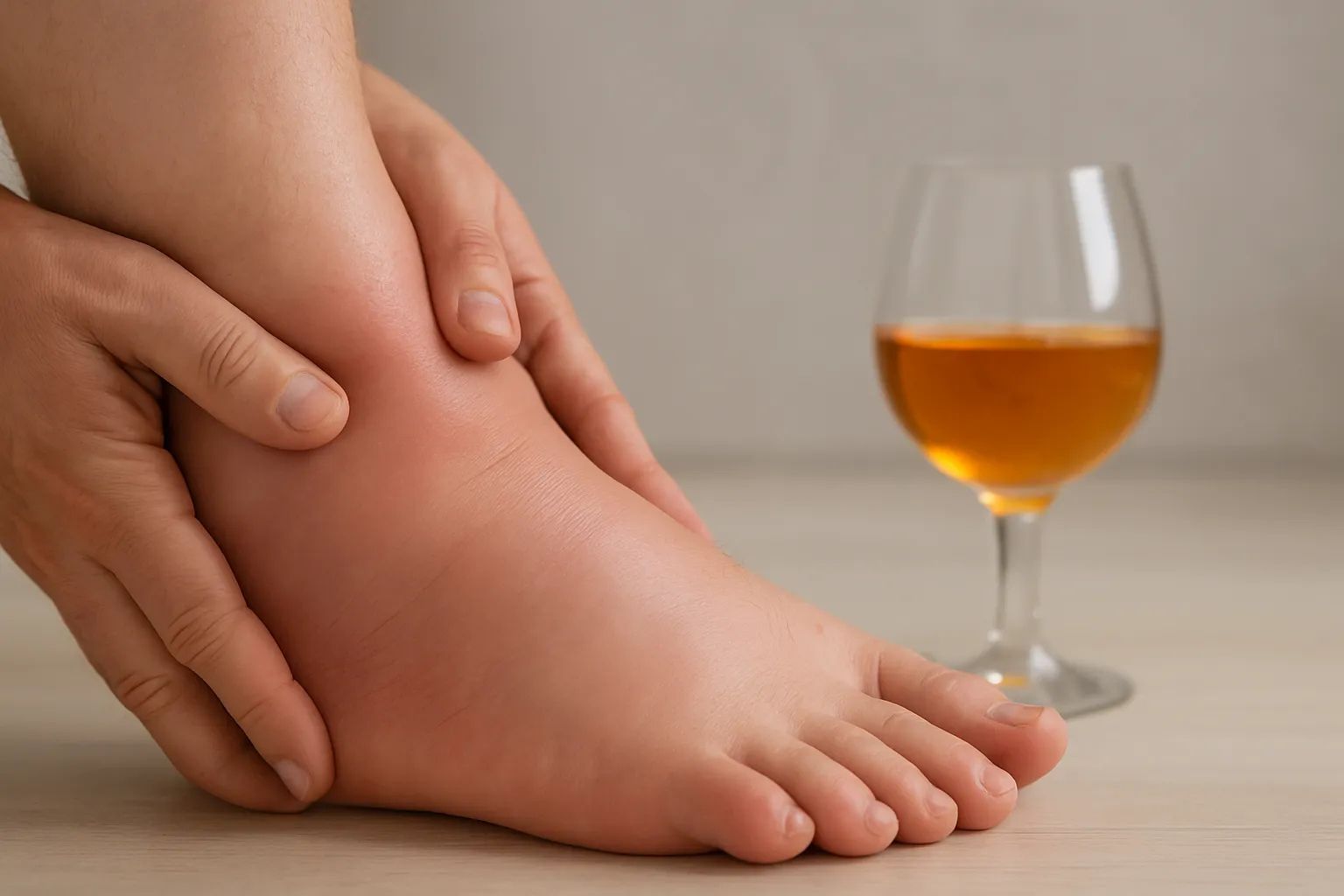
Yes, drinking alcohol can cause ankle swelling because it leads to fluid retention, dehydration, and poor circulation. Alcohol affects how your body manages salt and water, which can make your ankles, feet, and even legs swell after drinking. People who consume alcohol regularly or in large amounts are more likely to notice this effect, especially if they have underlying conditions like liver, heart, or kidney issues.
In most cases, the swelling is temporary and improves with rest, hydration, and avoiding alcohol. However, persistent or painful swelling may signal a more serious health problem and should be checked by a doctor.
Introduction
Many people notice their ankles or feet feeling swollen after a night of drinking, but they often dismiss it as harmless. However, drinking alcohol can cause ankle swelling due to its effect on circulation, hydration, and inflammation. Alcohol acts as a vasodilator — it widens blood vessels — which can lead to fluid pooling in the lower body. Combined with dehydration and sodium retention, this may cause temporary or even chronic ankle swelling in some individuals. Understanding why alcohol causes this reaction helps you recognize when it’s a short-term issue and when it might signal an underlying health concern.
How Alcohol Affects Fluid Retention
Alcohol directly impacts the body’s ability to regulate fluids. It acts as a diuretic, making you urinate more and lose essential electrolytes like sodium and potassium. This dehydration triggers your body to hold onto any remaining fluid — often showing up as swelling in the ankles, feet, or hands.
Additionally, alcohol causes blood vessels to expand, which slows circulation and allows fluid to leak into surrounding tissues. If you drink frequently or consume high-sodium beverages like beer or cocktails, the risk of fluid retention increases. Over time, chronic drinking can strain the kidneys and liver — two organs responsible for balancing fluids — worsening the swelling. This is why even mild drinking can sometimes result in noticeable puffiness around the ankles.

Why Ankles Swell After Drinking Alcohol
Ankle swelling after drinking alcohol happens due to a mix of fluid imbalance, poor circulation, and inflammation. When alcohol enters your bloodstream, it widens your blood vessels, making it harder for your body to pump blood back up from the lower extremities. This leads to fluid pooling in the ankles and feet, especially after long hours of sitting or standing.
In addition, alcohol triggers an inflammatory response in the body. Your tissues may retain water as part of that process, creating a puffy or bloated appearance. People with underlying issues — like liver disease, heart problems, or venous insufficiency — may notice the swelling more severely. Even moderate drinking can temporarily affect fluid movement and cause visible ankle puffiness the next morning.
Is Alcohol-Induced Ankle Swelling Dangerous?
Occasional ankle swelling after drinking isn’t always dangerous, but it can be a warning sign if it happens often or lasts for more than a day. Persistent swelling may indicate liver dysfunction, heart disease, or kidney problems — all of which can worsen with regular alcohol use. Alcohol also increases sodium levels and dehydrates your body, making fluid retention more likely.
If swelling is accompanied by symptoms like pain, redness, shortness of breath, or fatigue, it could signal a more serious condition such as alcohol-related liver damage or heart failure. Ignoring these signs can delay diagnosis and treatment. In short, while mild swelling might be harmless, recurrent or severe ankle puffiness after drinking requires medical attention to rule out underlying health issues.

How Long Does Ankle Swelling Last After Drinking?
The duration of alcohol-related ankle swelling depends on how much and how often you drink. For most healthy people, mild swelling typically goes away within 24 to 48 hours after the body metabolizes the alcohol and restores fluid balance. Staying hydrated, limiting sodium intake, and elevating your legs can help speed recovery.
However, if the swelling persists for more than two to three days, it might indicate an underlying issue such as poor circulation, heart strain, or liver inflammation. Heavy drinkers may experience chronic fluid retention that doesn’t resolve easily. If your ankles stay swollen even after resting and hydrating, it’s important to consult a doctor to check for long-term alcohol-related complications.
When to See a Doctor for Alcohol-Related Swelling
| When to See a Doctor for Alcohol-Related Swelling | Details |
|---|---|
| Mild Swelling | Often temporary and may resolve within a day after drinking. |
| Persistent or Painful Swelling | May signal an underlying health problem such as liver, kidney, or heart issues. |
| Accompanying Symptoms | Seek medical help if swelling occurs with shortness of breath, fatigue, jaundice (yellowing skin), or chest discomfort. |
| Recurrent Swelling After Drinking | Could indicate the body’s inability to process alcohol or sodium properly. |
| Recommended Medical Tests | Doctors may perform blood tests, liver function checks, or heart assessments to identify the cause. |
| Why Early Diagnosis Matters | Helps prevent serious complications and encourages safer drinking habits or lifestyle adjustments. |
Preventive Tips for Avoiding Alcohol-Related Swelling
Preventing ankle swelling after drinking alcohol starts with moderation. Limiting alcohol intake allows your body to maintain fluid balance and reduces stress on your liver and kidneys. Always alternate alcoholic drinks with water to stay hydrated and minimize water retention. Avoid high-sodium snacks like chips or processed foods while drinking, as salt increases fluid buildup in the legs and feet.
Regular exercise, leg elevation, and wearing compression socks can also improve circulation and reduce swelling. If you notice swelling after even small amounts of alcohol, consider taking a break from drinking to observe changes. Pairing a balanced diet with responsible alcohol habits helps maintain healthy blood flow and prevents recurring inflammation or fluid retention in the ankles and feet.
FAQs About Alcohol and Ankle Swelling
1. Can drinking alcohol really cause ankle swelling?
Yes — alcohol can cause ankle swelling by promoting dehydration, sodium retention, and poor circulation. It also increases inflammation, which can make your ankles and feet puff up after drinking.
2. How long does ankle swelling last after drinking alcohol?
Mild swelling usually goes away within 24–48 hours, especially if you hydrate well and rest your legs. Persistent swelling may indicate liver or kidney strain.
3. Is ankle swelling after drinking dangerous?
Occasional swelling isn’t always serious, but frequent or painful swelling could signal an underlying condition such as heart, liver, or kidney problems.
4. How can I reduce swelling quickly?
Drink water, reduce salt intake, elevate your feet, and apply a cold compress to ease inflammation. Avoid alcohol until swelling subsides completely for better recovery.